Fifty-fifty odds sound simple until you put real money or a real decision behind them. That single moment of uncertainty - heads or tails - has been repackaged into an entire category of mobile apps that range from throwaway novelty tools to polished games with animation, sound design, and betting mechanics layered on top of a basic random event. Some of these apps are genuinely useful for quick decision-making. Others exist purely for entertainment, dressed up with visual flair to make a coin toss feel like an event worth watching.
This crazy coin flip app review looks at what separates a forgettable random number generator from an app worth keeping on your phone. Interface design, randomness quality, and replay value all matter more than they seem to at first glance. If you're weighing whether a themed option is worth trying, the full details on one such title are covered further down, alongside a breakdown of how it compares to plainer alternatives. From there, we'll get into what actually makes a coin flip simulator trustworthy, and which apps consistently earn recommendations from people who've tried more than a handful.
By the end, you should know exactly what to look for - and what to avoid - the next time you search for a digital coin toss.
What Makes a Coin Flip App Worth Using
Not every coin flip app deserves a spot on your home screen. The difference between a mediocre one and a genuinely good one usually comes down to three things: how convincing the randomness feels, how the app is built, and whether it does anything beyond the basic function of flipping a virtual coin.
Randomness and Fairness
A coin flip app is only as good as its random number generator. Most rely on standard pseudo-random algorithms built into mobile operating systems, which are more than adequate for casual use - deciding who does the dishes or which restaurant to pick. Problems arise when an app's outcomes feel suspiciously patterned, favoring one result over long stretches of use. A well-built random coin toss app should produce results that, over hundreds of flips, land close to a 50-50 split. If you notice repeated streaks that feel engineered rather than coincidental, that's a red flag worth taking seriously.
User Interface and Experience
Interface quality shapes how often people actually return to an app. A cluttered screen with intrusive ads breaks the simplicity that makes coin flipping appealing in the first place. The best designs keep the flip button prominent, the animation quick, and the result unmistakable at a glance. Speed matters too - nobody wants to wait three seconds for a coin to stop spinning when they're trying to make a quick call.
Extra Features That Add Value
Some apps go further than a single tap. History logs that track your last twenty flips, customizable coin skins, sound effects, and multi-flip modes for group decisions all add genuine utility. Others introduce game mechanics - streak bonuses, wagering with virtual currency, or themed visuals - turning a mundane utility into something closer to a casual game.
- Consistent 50-50 outcome distribution over repeated use
- Fast, clean animation without unnecessary delays
- Minimal, non-intrusive advertising
- Optional history tracking for transparency
Crazy Coin Flip App Review: A Closer Look
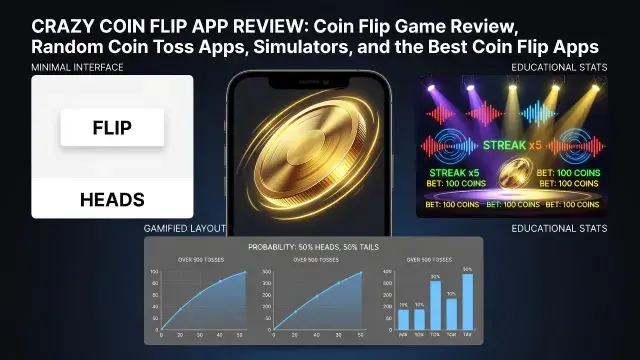
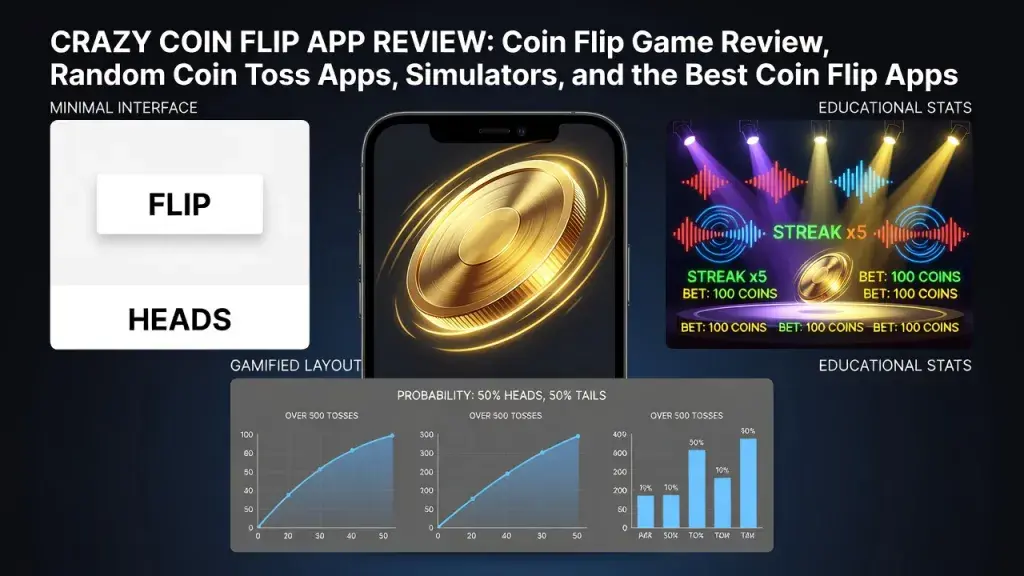
Among the more visually ambitious entries in this space is a title built around a coin-flip theme with betting-style presentation, bright animation, and a game structure that rewards streaks rather than treating each flip as an isolated event. This crazy coin flip app review focuses on what separates it from a plain utility app.
Design and Presentation
The visual identity leans into spectacle. Coins spin with exaggerated motion, sound cues reinforce wins, and the color palette is built to hold attention rather than fade into the background. This is a deliberate choice - the app isn't positioning itself as a quick-decision tool but as light entertainment with a gambling-adjacent structure.
Gameplay Mechanics
Rather than a single flip-and-done interaction, the app incorporates progression elements: streaks, multipliers, or escalating stakes depending on how the session is structured. This shifts it firmly into game territory rather than utility territory. Users looking for a straightforward random coin toss app may find the added mechanics distracting; users looking for entertainment will likely find them the entire appeal.
Who It's Actually For
This isn't a tool for splitting a check or deciding who goes first in a board game. It's built for people who enjoy the tension of escalating odds and visual payoff - closer in spirit to a casual slot-style game than a decision-making utility. Recognizing that distinction before downloading saves disappointment either way.
Coin Flip Game Review: Comparing Popular Formats
The broader category of coin flip games splits into a few recognizable formats, each built around a different use case. Understanding these categories makes it easier to judge any individual coin flip game review - including the one above - against the right benchmark.
Simple Utility Apps
These are stripped-down tools: one button, one animation, one result. No ads beyond a small banner, no in-app purchases, no gamification. They exist purely to answer a yes/no or option-A/option-B question fast. Their value lies entirely in speed and reliability.
Gamified Betting-Style Apps
These apps borrow structure from casino games - virtual currency, streak multipliers, escalating risk - while keeping the core mechanic (a coin flip) intact. They're built for engagement and session length rather than quick answers, and they tend to include more polished animation and sound design as a result.
Multiplayer and Social Formats
Some apps let two or more people flip against each other, wagering virtual points or settling casual disputes with a shared, verifiable result. These formats prioritize transparency - both parties need to trust the outcome - so randomness quality becomes even more important here than in solo-use apps.
Random Coin Toss App vs. Coin Flip Simulator: What's the Difference
These two terms get used interchangeably, but there's a meaningful distinction worth understanding before you download anything.
Defining the Random Coin Toss App
A random coin toss app is built for a single purpose: producing an unbiased binary outcome as quickly as possible. It's a decision-making tool first, entertainment second - if entertainment factors in at all. These apps tend to be minimal by design, and that minimalism is a feature, not a limitation.
Defining the Coin Flip Simulator
A coin flip simulator, by contrast, often aims to replicate the physical experience of tossing a coin - accounting for spin, flip height, and even simulated physics that mimic a real coin's tumble through the air. Some simulators are built for statistics education, letting users run thousands of virtual flips to observe probability distributions firsthand. Others are built purely for the tactile satisfaction of watching a realistic coin spin and land.
Which One You Actually Need
If you need a fast answer, a random coin toss app serves you better - less visual noise, quicker results. If you're curious about probability, teaching a statistics concept, or just enjoy the aesthetic of a realistic flip, a simulator is the better fit. Neither is objectively superior; they're built for different intentions.
Best Coin Flip Apps Available Today
Judging the best coin flip apps requires balancing simplicity against features, and reliability against novelty. A handful of criteria consistently separate strong apps from weak ones across app stores.
Top Picks for Quick Decisions
For pure speed and reliability, look for apps with a single-screen interface, no forced account creation, and minimal permissions requested. These apps typically load instantly and produce a result within a second of tapping the screen - exactly what you want when settling a quick disagreement.
Top Picks for Entertainment Value
If you're after something closer to a casual game, prioritize apps with strong animation, sound design, and progression mechanics. These titles reward repeated use through visual polish rather than functional necessity, making them better suited to idle entertainment than practical decision-making.
Top Picks for Education and Statistics
Apps built around bulk-flipping - running hundreds or thousands of virtual tosses in seconds - serve a genuinely useful educational purpose. They let students and curious users observe how outcomes converge toward an even split as sample size grows, turning an abstract probability lesson into something visible and interactive.
- Best for speed: minimal single-tap utilities with no ads before the result
- Best for entertainment: themed apps with animation and streak mechanics
- Best for learning: bulk-flip simulators with visible statistical output
How to Choose the Right Coin Flip App for Your Needs
The right choice depends entirely on why you're flipping in the first place. Matching intent to app type prevents the common mistake of downloading something overbuilt for a task that needed thirty seconds and one tap.
Match the App to the Occasion
Settling a quick decision calls for a barebones utility. Killing time or chasing a bit of casual entertainment calls for something with more visual and gameplay depth. Teaching or learning about probability calls for a simulator built around volume and data display rather than single-flip drama.
Check for Transparency and Fair Randomness
Before committing to any app long-term, run a personal test: flip it fifty or a hundred times and track the results. A legitimate app should land close to even. Persistent skew toward one outcome suggests either a poorly implemented random number generator or, in rarer cases, a deliberately biased mechanic hidden inside a gamified structure.
Consider Permissions and Ad Load
A coin flip app has no legitimate reason to request access to contacts, location, or camera. Excessive permission requests are a sign the app's business model relies on data collection rather than the utility it claims to offer. Similarly, an ad-to-content ratio that forces a full-screen video before every single flip erodes the entire point of a quick-decision tool.
Frequently Asked Questions
Are coin flip apps actually random, or can they be rigged?
Most legitimate apps use standard random number generators that produce results close to genuinely unpredictable outcomes over large sample sizes. Gamified apps with betting mechanics occasionally weight outcomes to favor engagement or monetization, so it's worth testing any app with repeated flips before trusting it for anything meaningful.
What's the difference between a coin flip app and a coin flip simulator?
A coin flip app typically focuses on delivering a fast, simple binary result for decision-making. A simulator usually adds realistic physics, animation, or bulk-flipping features aimed at replicating the physical experience or demonstrating probability over many trials.
Do gamified coin flip apps involve real money?
Some do, particularly those styled after casino games, while others use only virtual currency with no real-world value. Always check an app's description and in-app purchase settings before assuming either way, since the visual style alone doesn't indicate whether real stakes are involved.
Can a coin flip simulator be used for teaching probability?
Yes, and this is one of the more practical uses for the format. Bulk-flip simulators that run hundreds or thousands of tosses in seconds let students see firsthand how outcomes trend toward an even split as sample size increases, making abstract statistical concepts visible.
Why do some coin flip apps have so many extra features?
Developers add streaks, sound effects, and visual themes to increase engagement and session length, particularly in apps designed around entertainment rather than quick utility. These features don't change the underlying randomness but do change how long people stay engaged with the app.
How can I tell if a coin flip app is trustworthy before downloading it?
Check the permissions it requests, read recent user reviews for complaints about skewed results, and look for a simple, ad-light interface as a sign of good design intent. Running your own test flips after downloading is the most reliable way to confirm fair behavior firsthand.